



Architects of Light: Persia’s Gift to Islamic Civilisation (Presentation and Extract)

 By: GEW Social Sciences Group (Editor: Hichem Karoui)
- Publisher : Global East-West For Studies and Publishing (GEW)
- Publication date : April 8, 2026
- Language : English
- Print length : 316 pages
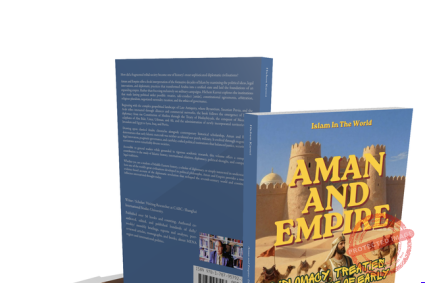
In Architects of Light, Hichem Karoui and the GEW Social Sciences Group present a powerful reinterpretation of Islamic civilisation through the lens of Persian influence. This book reveals how the encounter between Arab and Persian worlds produced one of the most dynamic and enduring civilisations in human history.
Rather than portraying history as a sequence of conquests, the author highlights processes of integration, adaptation, and creativity. Persian administrators, scholars, and artists did not merely inherit the Islamic world—they helped build it.
The book explores key domains of influence:
- Governance and administration shaped by Sassanid models
- Scientific advancement through translation and innovation
- Medical and philosophical traditions that bridged cultures
- The revival of Persian language and literary excellence
- Artistic and architectural achievements that defined Islamic aesthetics
Through a carefully structured narrative, readers gain insight into how knowledge circulated across regions, how languages evolved, and how intellectual traditions merged into a unified yet diverse civilisation.
This accessible yet scholarly work is ideal for readers interested in history, religion, and cross-cultural exchange. It provides both a broad overview and detailed analysis, making it suitable for students, academics, and general readers alike.
Available in various formats and editions (Hardcover, paperback, Kindle and Ebook) everywhere in the world
Amazon
Universal Link (Kobo, Apple, Barnes & Noble, bookshop.org, FNAC, Leclerc, etc.)

Contents
Introduction: What The Arabs And Muslims Owe to Iran
by Hichem Karoui
The research on the contributions of Persians to the Islamic civilisation is one of the most vibrant and thought-provoking areas in the history of Islam. The essay Architects of Light: Persia’s Gift to Islamic Civilisation is a detailed analysis of how the Persian administrative systems and intellectual traditions, artistic innovations, and cultural practices influenced the evolution of Islamic civilisation from the early centuries until the pre-modern era. The essay is an introductory guide that will be useful to students of Islamic history, especially those who study Iranian history, but also scholars and researchers who need to learn more about the intricate interaction between the Arab and the Persian worlds and, more generally, the process by which different cultures were combined to form one of the greatest civilisations in history.
The source material of the essay at the end of the book is rich despite its selectivity and indicates a high level of knowledge of cultural interaction, institutional development and intellectual synthesis. Instead of considering the Arab conquest of the Persian Sassanid Empire a time of erasure or substitution, the essay shows how Persian sensibility infiltrated Islamic forms to produce something neither wholly Arab nor Persian but truly and deeply civilisational in its extent. The purpose of the bibliographic reference list at the end of this book is to direct the reader to authoritative sources that can further elaborate and contextualise the key themes discussed in the essay.
The Sassanid Administrative Inheritance and State Formation.
1.1 Structures of Sassanid Governance.
The Sassanid Empire systems of administration were a culmination of centuries of imperial experience, honed through the rule of lands as far east as Mesopotamia and as far west as Central Asia. These pillars are fundamental in understanding the way Islamic institutions of governance came into being during the centuries after the Arab conquest. The idea of the deep grammar of statecraft, as expressed in the essay, is that there are underlying patterns and principles that go beyond specific instances of political discontinuity. This profound grammar was not only a bureaucratic language but also a philosophy of government based on ideas of order, hierarchy, and the keeping of records.
The Persian secretarial tradition focused on the detailed records of the state affairs, the thorough classification of facts, and the preservation of regular archives. These were not novel practices of the Sassanids but the wisdom of millennia of imperial rule in the Near East. The Sassanid court at Ctesiphon kept comprehensive documents on taxation, military structure, diplomatic documents and administrative trials. When Arab administrators conquered these lands, they not only inherited buildings and lands, but also whole institutional structures that had been effective over generations.
The divan system which came to the fore of Islamic administration had strong Sassanid origins. The word itself is of Middle Persian origin, which represents the language legacy of administrative terms. The divan was both a physical location and an administrative principle; it was a place where the business of state was carried on and a system of registers where that business was registered. Likewise, the office of the vizier, though denoted by an Arabic word, represented something essentially the same as the Sassanid wuzurg framadar, the “grand steward” who would organise the vast activities of the empire in various spheres.
1.2 Knowledge Transfer to the Islamic Period.
The introduction of administrative expertise in the Sassanid and Islamic periods is one of the most important institutional changes that occurred during the mediaeval times. This movement was not an overnight event but a slow process of acquisition, adjustment and perfecting which occurred over generations. Persian administrators and scribes, most of whom had converted to Islam or had to live under Islamic rule, continued with administrative traditions of the pre-Islamic period but modified them to suit the needs and ideologies of the new Islamic state.
This transition and synthesis were embodied in the Barmakids, a Persian family of Balkh, the lineage of which dated to a Buddhist monastery. They became prominent during the Abbasid caliph Harun al-Rashid’s reign as his main ministers and administrators. Their administrative talent was essentially Persian in nature – they knew how to keep records, the value of patronage, and the absorption of learned men into state machinery. The Barmakids never subjected Islam to Persian rule; they occupied the Islamic rule with advanced Persian administrative expertise. The Abbasid state, under their rule, evolved more advanced bureaucratic processes, better methods of tax collection, and coordination of provincial governance.
Bureaucratic rationality and rule of law, which were stressed in Persian administrative thought, were reflected in the works of such an Arabic-writing Persian as Ibn AL-Muqaffa’. Ibn AL-Muqaffa condensed Sassanid courtly wisdom into snappy Arabic sayings on behaviour, rule, and self-control. He was not a polemicist of Persian excellence, and his writing was very judicious, but his prose exuded an ideal of civilisation, siyāsat (statecraft), adab (courteous behaviour), and the discipline of reason – ideas which were of the court schools of pre-Islamic Iran. In his exhortation to good government, he exhorted the caliph to regularise law, to tie governors by procedure, and to honour the dignity of subjects. This was, in short, a proclamation of bureaucratic rationality and the rule of law which would later form the basis of Islamic administration.
Persian secretaries, who had been trained in the customs of the Sassanid chancelleries, knew that administration needed more than military strength or religious authority. It demanded complex communication networks, effective record-keeping techniques and systems of coordinating the work of various officials in large areas. This sophisticated form of market regulation was exemplified by market regulation by the office of the muhtasib, or inspector of weights and public morals. Though Islamic ethical issues were driving the office, the accuracy of procedure that marked the major cities under Persian rule was indicative of the earlier Iranian urban management. Hisba manuals (manuals of market regulation) taught officials about the quality of bread, the safety of bridges, and everything in between and showed that there was a comprehensive vision of civic life that incorporated Islamic ethical injunctions with administrative practice.
1.3 Material Infrastructure and Urban Planning.
The establishment of Baghdad by al-Mansur in 762 CE was a deliberate blend of Islamic political thought and Persian administrative and architectural practices. The circular design of the city, which was a unique element of its design, reminded one of the Sassanid city of Gur (Firuzabad). This type of architecture was not selected by chance, but was a manifestation of Persian knowledge of the structure of cities and the right balance between the centre and the periphery in the imperial rule. The Nawbahar family, Persian astrologers who had studied the lore of Sassanid kings, selected what was calculated to be an auspicious time to lay the first brick of this new imperial capital.
In addition to the symbolism of architecture, the establishment of Baghdad was a holistic conception of how Islamic rule might assimilate Persian institutional experience. The divan system, whose words and ideas had Middle Persian roots, was used to designate the registers and departments which would spread in the Islamic state. The vizier’s office, based on Sassanid models, would coordinate the complex activities of the empire from this new centre. There was a chain of expertise between the caliph, who, behind screens and curtains, superintended the work, and the peasants, who were working in remote fields. This complex chain of command helped Persian secretaries to comprehend how to turn imperial will into administrative action.
The Islamic state also took over Persian heritage in its material infrastructure, such as its roads, its irrigation systems and its economic organisation. The qanat system, a brilliant technique of drawing water out of underground reserves, was modified to fit Sassanid prototypes to be used in Islamic lands. These underground waterways were built with great engineering accuracy and enabled irrigation of dry areas and gave a dependable supply of water to cities and settlements. It was the very type of systematic record-keeping and organisation of labour which Persian administrators knew so well that the maintenance of these complex systems demanded.
The standardisation of weights and measures, a seemingly prosaic issue, was an important aspect of Sassanid administrative genius that was inherited and developed by the Islamic state. Administers made one commercial space by making sure that a dinar in Rayy was the same value and weight as a dinar in Basra. Cities such as Merv and Nishapur had mint masters who struck coins with legends that testified to the power of the caliph, but the silver content and the die style spoke a language of trust acquired in Sassanid ateliers. This standardisation promoted commerce and curbed conflicts over currency and visible insignia of united imperial power.
The centuries of Sassanid imperial management and agricultural innovation and irrigation practices were preserved under Islamic rule. The diffusion of Iranian agrarian practices, such as sophisticated irrigation systems and the introduction of new crops, changed the economic situation in the early Islamic world. Rice, formerly a dainty on court tables, was a staple along the river deltas as Iranian techniques diffused. The Persian agricultural knowledge was translated into tangible economic gain for the rest of the Islamic world, with sugarcane plantations in Khuzestan being used to sweeten not just Persian cuisine but also Arab cuisine.
2. The Translation Movement and Preservation of Greek-Persian-Islamic Knowledge
2.1 Organisation structure and patronage systems.
The Translation Movement, which has been described as a simple business of translating Greek philosophical and scientific works into Arabic, was actually a complicated institutional project, which relied heavily on Persian administrative frameworks and Persian knowledge of how to arrange mass intellectual endeavours. The House of Wisdom (Bayt al-Hikma), which is a legend in the history of Islamic science, was not merely a library or a school but an administrative centre with well-defined hierarchies, a system of procedures, and complex ways of organising the efforts of several scholars. The administrative assistance of the Persian administration, which was the basis of this institution, rendered its extraordinary productivity possible.
The Barmakids, who had provided the infrastructure of the Translation Movement in many aspects, knew that intellectual projects needed to be carefully coordinated and provided with resources just like military campaigns or tax collection. With their support, translation became a normalised state business and not an individual academic endeavour. This standardisation implied that translators and copyists would receive a stable patronage, that funds could be safely channelled to the purchase of texts and materials, and that work could be done without the continuous disruption of unpredictable funding. The concrete structures of knowledge multiplication paper mills to make the surfaces on which texts were written, scriptoria with many copyists, and distribution systems of finished works all came into existence due to the knowledge of Persian administrators on how to structure complex businesses through time.
The barid, the imperial post system which was an heir of Sassanid administration, became vital to the success of the Translation Movement. This complex system of communication carried not only state messengers but also individuals and even books along the well-known routes between the large cities of the empire. The knowledge spread like caravan and courier, like mosque and market, like zawiya and court, with every transmission adding a layer of insight and localised knowledge. The presence of good transportation and communication systems, which were sustained by the systematic Persian administrative systems, enabled scholars to consult with fellow scholars far away, to exchange manuscripts and to coordinate their efforts despite geographical dispersion.
Cities such as Merv, Nishapur, Rayy, and Isfahan, which were part of the network of the Translation Movement, had long histories of Persian life and had large collections of scholars in libraries, as well as local sponsors to support them. Merv, especially, had been a great seat of Sassanid scholarship and was kept alive under Islam. The subsequent wave of scholars who flocked to Baghdad were frequently from these eastern Persian cities and had been trained in places such as Nishapur and Isfahan. The Translation Movement, whose geographical dispersion of learning was thus rooted, was based east of the Syrian frontier, where Greek had previously been the language of scholarship, and based rather in Persianate heartlands. This establishment on Persian soil would in future centuries bring Islamic civilisation to even greater parts of Central Asia and would, in these areas, become the centre of learning in Bukhara, Samarkand, and others.
2.2 Translators and Scholars: Scholars of Persian origin.
Although the Translation Movement is frequently talked about as though it were mostly an Arab accomplishment, a closer look shows that scholars of Persian origin were instrumental in determining the approaches to the movement as well as the extent. These scholars not only introduced linguistic expertise but also a philosophical outlook influenced by Persian intellectualism. The most renowned translators, Hunayn ibn Ishaq, a Christian Arab, and his son Ishaq ibn Hunayn, were employed in the institutional contexts created by Persian administrative genius and frequently in cooperation with Persian scholars.
One mathematician, al-Khawarizmi, of Khawarezm (a region in Central Asia with strong Persian cultural influences) wrote seminal works on algebra at the court of the caliph al-Ma’mun. His work changed the way mathematics was perceived and done and laid down structures that would shape the thinking in mathematics far into the Islamic world. But al-Khawarizmi was not operating in a vacuum; he was a member of an intellectual community based in Baghdad that included Persian scholars, Arabs, Christians, Muslims, and scholars of all kinds. The institutional structures which enabled such heterogeneous scholars to collaborate fruitfully were essentially Persian in nature.
The example of the transition between translation and original synthesis was the work of Ibn al-Muqaffa’, who was born Ruzbih in Fars, a former Zoroastrian who later became Muslim. His Arabic translations of Pahlavi literature, including the animal fables of Kalila wa Dimna, redefined the whole art of advice and political counsel. These fables, which had travelled to India via Persia to the Arab world, contained wisdom concerning governance and virtue. But in the translations of al-Muqaffa they were more than copies of ancient works; they were Arabic eloquence. The counsel art which al-Muqaffa had formulated was a combination of Persian administrative philosophy and Arabic rhetorical traditions.
The Translation Movement could not have been sustained without scholars such as al-Muqaffa’ who were able to mediate between the cultures of Persian and Arabic intellectualism, i.e., individual translators of specific texts, not developing an intellectual programme. With these synthesisers the translation movement was what it really was: a programme of intellectual change on a civilisation-wide scale. The work of al-Muqaffa showed that borrowed wisdom might become indigenous eloquence, that Greek thought refracted through Persian thought could be translated into Arabic in a manner that it was no longer a foreign importation but a necessary element of Islamic thought.
2.3 Methodology: Testing and Refining Knowledge.
A unique aspect of the Islamic Translation Movement was not just the process of translation but the later approach of testing, refining and correcting knowledge that was translated. The hypothesis of this methodology was radical: the translated texts were not to be simply memorised and passed on without changes; they were to be checked by the empirical observation and, in case of need, they were to be corrected. This move towards acceptance to critical engagement was a specifically Persian intellectual practice, shaped by Sassanid practices of practical knowledge.
The Persian astronomers were joined by Arab and Syriac-speaking colleagues when the caliph al-Ma’mun commissioned the survey of the length of a degree of latitude in the Syrian desert, a project that required them to travel in groups to the desert to carry out the survey. This measurement project was not just a scientific interest but a harbinger of a new self-confidence of the intellectual status of the Islamic world. Some measurements and calculations had been given by the classical authorities, Ptolemy and others. Instead of taking these at face value, the teams of al-Ma’mun made firsthand observations to know whether the inherited wisdom needed to be corrected or changed. The Persian astronomers who were involved in such measurements introduced technical skills but also a philosophical bias towards empiricism that had strong roots in Sassanid administrative tradition, where precise knowledge of the physical world was needed to collect taxes and run irrigation and administration.
The process through which the translation movement was done was through constant refinement and correction. Subsequent generations of scholars re-followed the footsteps of earlier translators, standardising terminology that had been haphazard, restoring passages that had been lost by earlier hands, and comparing Greek original texts with Syriac witnesses. The encyclopedic spirit that subsequently became a matter of course to scholars developed out of this iterative process. The Fihrist of Ibn al-Nadim, a collection of Baghdad bookseller of Persian origin, was the climax of this encyclopaedic urge. This enormous index of writings in different languages and denominations represented a supposition that knowledge could be organised, arranged, and transmitted to new generations of readers. This supposition – that thorough systematisation of knowledge could and should be – was largely due to the Persian love of systematising thought and to an imperial egotism which rendered the gathering and ordering of wisdom a badge of good government.
3. Persian Medical and Healing Sciences.
3.1 Gundishapur Medical Academy: Academic Background.
An important crossroads of medical traditions was the city of Gundishapur in Khuzestan, southwestern Iran. This was the site of a royal academy in late antiquity which collected Greek philosophical and medical texts, Syriac Christian texts and Indian scientific texts . This was not just a set of isolated traditions but a working institution in which scholars collaborated, in which medical students were trained in practice, and in which the ideas of various sources could come into contact and new syntheses be produced.
The best known representatives of the medical tradition of Gundishapur were the physicians of the Bukhtishu family, who were the representatives of several generations of medical professionals who operated under this hybrid intellectual system. These doctors relocated to Baghdad in Gundishapur to serve the Abbasid caliphs generationally, literally connecting two worlds and two eras . They not only carried with them technical medical knowledge based on Greek writings such as those of Galen and Hippocrates but also a specific style of medical practice, a blend of empirical observation and theoretical knowledge. The Bukhtishu family doctors knew that successful treatment meant the knowledge of the general laws of humoral pathology as well as the specific conditions of each patient.
The blending of Greek medical teachings with Indian and Syriac education in a working clinical setting was what made Gundishapur revolutionary as a medical school. Doctors educated in this academy were taught pharmacology and case management; they read Hippocratic and Galenic texts translated into Syriac, but also Indian medical texts which had reached them via trade routes. Tables were shared by astronomers and philosophers and the surgeons and practical physicians. When plague struck or fevers increased with seasonal floods, these physicians were not theorists but practitioners, used to rounds of bedside, to recipes of practical medicine, and to constant contact with the actual sufferers. This synthesis of theoretical study with clinical experience, instituted at Gundishapur, was to become a prototype which would influence Islamic medicine during its classical era .
The culture of scholarly patronage and the institutional knowledge of Persian bureaucratic practice, with its meticulous record-keeping and endowments in the service of the common good, furnished the soil in which medical institutions could grow. The Abbasids and the Persian dynasties, when they attempted to found hospitals and medical schools, did not start afresh; they took the forms of the Sassanid hospitals and clinics and modified them and improved them into what came to be known as the bimaristan, the house of the sick, in a language whose very word ‘patient’, bimar, betrays its Persian roots . The bureaucratic structures which supported medicine, the organisation of hospitals, the supply of pharmaceuticals, and the organisation of medical personnel were based on Persian administrative models.
3.2 Clinical Innovation and Empirical Method.
One of the first Persian doctors to condense the Gundishapur tradition into a systematic medical work was Ali ibn Sahl Rabban al-Tabari, a multi-skilled Persian-born polymath who grew up in an educated family in Tabriz, on the southern side of the Caspian Sea. In the ninth century, his Firdaws al-Hikmah (Paradise of Wisdom) was one of the earliest detailed encyclopedias of medicine in Arabic . Anatomy, dietetics, pharmacology and mental diseases were presented together in this work, showing a systematic approach to medical knowledge, which was largely due to Persian traditions of organising and presenting information.
Ali ibn al-Abbas al-Majusi (also called Haly Abbas), a physician of Ahvaz, southwestern Iran, followed al-Tabari, and in his Complete Book of the Medical Art (Kitab al-Maliki, in Latin Liber Regalis) gave a clear, two-part division of theoretical and practical medicine . The pages of al-Majusi explained the anatomy of the body, the humoral theory of disease, and the signs of the different diseases more precisely than would later send his book westwards to the medical school of Salerno and further, and which would shape European medicine for centuries to come. But the greatest medical inventor of the time was Muhammad al-Razi, who held that medicine was essentially a craft of scepticism under the guidance of pity. Al-Razi urged even the most respected authorities to doubt themselves in the presence of the ailing child before them, to seek more effective ways and closer attention.
There is no better illustration of the approach taken by al-Razi than in his work on smallpox and measles, Kitab al-Jadari wa’l-Hasbah, one of the earliest clinical descriptions which made the distinction between these two diseases and described their symptoms and treatment with a precision never before achieved . Prior to the work of al-Razi, such diseases were commonly mixed up; the doctors did not have a systematic way of distinguishing them. This was altered by al-Razi, who closely observed the clinical, described symptoms meticulously and strictly compared cases. His approach was a model of the empiricism which had its origins in the practice of Gundishapur but was raised by al-Razi to a philosophical status on the way medical knowledge ought to be sought.
The cross-fertilisation with other medical cultures was perennial and productive. The Nestorian Christians of Gundishapur taught in Baghdad and preserved traditions of Greek medical education, adapting it to Islamic conditions. Indian doctors also provided invaluable experience in pharmacology and introduced botanical and pharmaceutical experience that added to the Greek medical theory. Arab scholars wrote on anatomy and surgery and developed operative techniques. Andalusian surgeons such as al-Zahrawi achieved great innovations in surgical equipment. Persians travelled in this commonwealth both as students and teachers, translating the Greek and Syriac authorities into Arabic and also creating original works in Persian . They manned hospitals funded by the Arab caliphs and the Persian emirs, showing that the practice of medicine was indeed part of Islamic civilisation and not the preserve of any one ethnic or language group. But Persian doctors and administrators were also key players in this medical venture as co-architects.
3.3 Development of Islamic Medical Institutions and Bimaristan.
The evolution of the bimaristan as a decidedly Islamic medical school was the integration of Persian administrative tradition with Islamic moral obligation to treat the ill. Though Islamic law and Quran teachings stressed the need to take care of the poor and the suffering, the institutional framework for putting this care into action was greatly influenced by the Persian models. The Sassanid Empire had hospitals and medical centres, knowing that a healthy people were needed to pay taxes and to serve in the army. These institutions were a mixture of practical interests of the health of the people and the philosophical devotion to the duty of the ruler to the welfare of his subjects.
The language of medical practice and institutions betrays this Persian legacy. The term ‘bimaristan’ is a combination of ‘bimar’ (patient) and ‘stan’ (place), which translates to a place of patients. Even the term ‘bimar’ is of Persian origin, not Arabic, an indication of the linguistic background of the very nomenclature of Islamic medicine. Likewise, most of the medical terms that were standardised in Islamic medicine bore etymological signs of Persian or Syriac derivation, a testament to the multilingualism of the early production of medical knowledge in the Islamic world.
The hospital administration and record-keeping methods that Persian administrators had devised allowed medical institutions to operate with a high degree of reliability in the long term. Endowments (waqfs) were created to fund hospitals that were run according to Persian-based administrative practices that guaranteed that the funds were reliably directed towards medical activity. The meticulous record-keeping of the patient cases, the pharmaceutical stocks, and the organisation of the medical personnel – all these administrative aspects of the medical practice were reliant on the systematic procedures based on Persian administrative traditions. In the case of the great hospitals of Baghdad, Cairo and Isfahan, the meticulous organisational logic of the functioning of the hospitals is more indicative of the Persian administrative genius than of the Islamic medical theory.
4. Cultural Synthesis, Language, and Literature.
4.1 Standardisation of the Arabic Language and the Influence of Persian.
The standardisation of the Arabic language was one of the intellectual accomplishments of the early Islamic era, but Persian scholars and scribes influenced this process at the most important moments. The necessity to conserve the Quranic text and to educate an ever-growing population that spoke numerous other languages resulted in the emergence of great grammatical schools. Persian scholars also had a leading part in these schools of learning, the most notable of them being Sibawayh, whose general grammar of the Arabic language established rules of such beauty as never before .
Sibawayh was a Persian who worked in the late eighth century and, in his grammatical work, introduced a precision and systematic nature that was reminiscent of the Persian intellectual traditions. The issue of mixture itself – how to create rules in a language which was absorbing non-native speakers of various linguistic origins – was a stimulus to new thought in the field of grammar. Instead of merely describing the natural use of Arabic by Arabic speakers, Sibawayh attempted to formulate the principles underlying that use, which could be used to explain and control that use. His grammatical work was the basis of centuries of Arabic grammatical studies.
Other than grammar, Persian scholars that had mastered Arabic also made significant contributions to the development of technical vocabulary. Persian secretaries and scholars tended to be involved in the challenging task of standardising terminology when translators had to translate Greek philosophical and medical terms into Arabic . Is a calqued (word-by-word) translation, a transliteration (sound-by-sound) or a substitution with an existing Arabic word preferred? Various translators took varying decisions, and this resulted in inconsistencies. The need to convey accurate meaning and make such vocabularies understandable to various audiences led to the standardisation of these technical vocabularies by Persian secretaries in order that subsequent readers would interpret the same terms.
The art of calligraphy and proportioned beauty in Arabic writing was advanced by Persian masters like Ibn Muqla and Ibn al-Bawwab . These calligraphers standardised the Arabic script into proportional beauty, establishing aesthetics that would make both the Quran and the worldly poetry equally beautiful. Their script innovations were not only aesthetic but also functional; a more regularised and clearer script opened the texts to greater accessibility and reliability in transmission. The standardisation of the Arabic script was visual in nature and was similar to the linguistic standardisation that Persian scholars had contributed to in grammar and vocabulary.
4.2 Rebirth and Canonisation of the Persian Language.
Although Persian scholars were also playing a role in standardising and refining Arabic, the Persian language was in the process of a fundamental change. Persian language and literature saw a spectacular revival and elevation to a new level in the tenth century, especially in the patronage of the Samanid dynasty in Central Asia. This was not a mere regression to pre-Islamic customs but instead a synthesis that was creative, where the Persian language was used as the medium of Islamic learning, the practice of administration, and high literature .
New Persian literary patronage centred in the Samanid court, which was founded in the major cities of Central Asia such as Bukhara, Nishapur and Samarkand. The patrons of this literary renaissance realised that Persian could have some functions that Arabic could not play in the lives of people whose main language was Persian. Depending on the judges and administrators, formal business could be done in Arabic, but sermons delivered to common believers, personal letters between family members, and decisions made in local administration could be done better in Persian. By the tenth century, Persian secretaries in the chanceries of Persian dynasties had discovered a style in Persian that was suitable to petitions, land grants, tax registers and diplomatic letters .
Although Arabic continued to be the default language in most official documents, particularly those of a religious nature, Persian infiltrated the margins to the main text of official documents. It is impossible to identify one of the decrees and declare it the first Persian administrative document, but the cumulative impact is evident in the literature that has come down to the present day: statesmen and scholars now authored whole books in Persian since they could be read by their patrons and by the publics of their patrons. The transition was not the substitution of Arabic for Persian but the introduction of Persian as the alternative form of learned language and administration.
The climax of this process of Persian literary recovery and reclaiming was the Shahnameh, the great epic poem written by Ferdowsi in the early eleventh century. But Ferdowsi was not the only one who was working alone and without precedent. His project ingredients had been put together many generations earlier. Chronicles maintained at the Sassanid court were called in Middle Persian the Khwaday-Namag, or the Book of Lords. These records had been met with by Arab conquerors, who had translated them into Arabic; one of the most influential translations was the Siyar al-Muluk by Ibn al-Muqaffa’, written in the eighth century. By the tenth century, a Tusan nobleman had commissioned a group of scholars to make the Book of Kings of Abu Mansur, a collection of Iranian royal lore in Persian prose .
Ferdowsi, with this mass of accumulated material – the Sassanid chronicle in Arabic translation, the tenth-century collection of royal Persian lore, the fragments of poetry and prose – had changed this material by his own genius of poetry into a monumental work. The Shahnameh was the presentation of the history of pre-Islamic Persia in Islamic verse, without losing the respect of the ancient heroes and kings of Persia, but squarely placing the story in an Islamic context. This synthesis was not imposed or unnatural; it was the natural result of the interpretation of their own history and identity by educated Muslims of Persian origin.
4.3 Adab Culture and Ethical Literature
The discussion about adab culture and ethical literature is presented here. The notion of adab, which has been translated as either the “courtly culture” or the sophisticated behaviour, became one of the key organising principles in Islamic civilisation, especially with the contribution and elaboration of the Persians. Adab did not only include the manners or superficial politeness but a holistic outlook of the way a refined individual ought to behave in society. It comprised poetry and the Quran, law and history, riddles and the riddance of vices, and a broadly conceived idea of education and self-formation.
Ibn al-Muqaffa, whose work in translating Persian literature into Arabic was mentioned above, generalised Sassanid courtly wisdom into Arabic prose maxims of behaviour, rulership, and discipline. He was no polemicist of Persian excellence, and discretion filled his mouth, but his prose was an ideal of civilisation based on siyasat (prudent statecraft), adab (courteous behaviour), and the discipline of reason—ideas which had their source in the court schools of pre-Islamic Iran. The world that he had translated into Arabic, the maxims of the chancelleries of the Iranian empire, the art of the Sassanid “mirrors of princes”, and the vision of the art of rule as a moral art were always Persian in their essence, despite the way he translated them into the most eloquent Arabic. His uninhibited politics later cost him his life as the caliph al-Mansur was offended by some of his advice, but his impact on Arabic prose style was long-lasting and far-reaching.
Adab was a literary culture that evolved especially in the eastern Islamic world cities of Nishapur, Rayy, Isfahan, and Bukhara, where it acquired a lay pedagogy which focused on practical courtly behaviour. The apprentices were taught penmanship at school and thence to the houses of the patrons, where libraries were open and where more was taught by conversation than by the rules of doctrine.
One thinker, Ibn Miskawayh, a Rey philosopher who worked as a librarian and tutor to Buyid viziers, wrote his Tahdhib al-Akhlaq (Refinement of Character), an ethical text which incorporated Aristotelian virtue ethics into a Persian atmosphere of courtly self-control. To Miskawayh, moral excellence was not an abstract philosophical concept but a habit developed by training the appetites by reason and habit.
This interpretation of adab as a discipline of self-formation that was pragmatic was heavily influenced by the Persian intellectual traditions. The ideal type of the adīb as minister was the learned vizier al-Sahib ibn Abbad, who conducted councils at which the exegesis of the Quran, grammar, poetry and politics converged in urban discussion.
Al-Tawhidi, a nimble-tongued, sharp-eared Baghdadi-Buyid essayist, noted evenings of learned dialogue in his Imt a’ wa-l-mu’anasa (Delight and Familiarity). The art of disagreeing – the readiness to enquire, to make fun, and to compromise – was interpreted as a civilising habit; adab was the lesson of how knowledge might be communal, not the property of individuals. These traditions of adab rooted in Persia were also self-consciously expressed in the historical texts.
The Nishapur scholar al-Tha’ālibi has gathered Ghurar akhbari muluk al-Furs, the treasury of the sayings and deeds of the Persian kings, showing Sassanid kings as a model of deliberation, generosity and severity in due measure. More importantly, this glorification of Persian role models did not override Arab role models. Other anthologies of Al-Tha’ālibī, like Yatīmat al-Dahr, were interwoven pieces of Arabic and Persian verse in a single tapestry of urban literature. The production of adab was observable in such collections: the Persian love of moderation, the Arab love of eloquence of the desert, and the linguistic strength of the Qur’an itself all found their place in a common vision of what could be embraced by a civilised culture.
The Siyasatnama of Nizam al-Mulk was the climax of this adab tradition when it was used in the questions concerning governance. This Persian guide to princes combined both practical government with moral rectitude and taught princes that good government was a spiritual deed. Translated and marked up in Anatolia to Transoxiana, the book was one that Turkish and other rulers learned to think of their own roles in government. The fact that this Persian adab tradition was continued and further developed by the next dynasties, the Seljuk, Timurid and Safavid, bears witness to its strength and its ability to influence the self-conception of Islamic civilisation.
5. Mathematics, Astronomy and Scientific Methodology.
5.1 Mathematics and Algebraic Novelty.
The invention of algebra as a formal mathematical system was the result of the efforts of al-Khawarizmi, a mathematician of Khawarezm, whose name even created the English word ‘algorithm’. Al-Khawarizmi wrote foundational treatises under the patronage of the caliph al-Ma’mun, which made algebra a separate branch of mathematics. His work revolutionised the way mathematicians tackled problems with unknown quantities and developed systematic procedures, which could be used on a variety of problems in commerce and inheritance law as well as surveying. Al-Khawarizmi was not toiling in utter originality but was instead relying on various mathematical traditions. The Indian methods of computation and Sanskrit astronomy, which had been highly valued in Sassanid and early Abbasid courts, also provided important aspects to Islamic mathematics. Indian computation and planetary tables were also translated under the caliph al-Mansur, as the Sindhind, most likely by Ya’qub ibn Tariq and Muhammad ibn Ibrahim al-Fazari.
These texts became common and were commented upon by later scholars and formed the foundation of subsequent Islamic astronomy. The Indian mathematics led to the Hindu-Arabic numerals and the concept of zero that ultimately revolutionised the practice of mathematics in the Mediterranean and beyond. The systematic mathematical terminology and notation emerged as a result of attentive cooperative efforts of researchers of various origins. Persian mathematicians did not just enrich the technical aspects of mathematics but also the structures of mathematics that transmitted and preserved mathematical knowledge. The encyclopaedic desire to organise mathematical knowledge, to produce compendia which would collect the various mathematical methods, had echoed the Persian love of a thorough systematisation of information.
5.2 Observational Astronomy and Institutional Science.
Astronomy was especially important in the Islamic civilisation, both practical and spiritual. The astronomy kept the cycles of religious life – prayer hours varied with the seasons, the qibla (towards Mecca) was to be determined in each city, the sighting of the moon started and ended every month, and the mathematics of the minarets’ shadows were worked out by astronomical skill. The Persian and Arabic astronomer, munajjim, might also be translated as ‘astrologer’, a fact that reminds us that the distinction between sky-reading as science and omen was permeable throughout much of the classical Islamic world. Most scholars were both, but some, such as al-Biruni, sneered at the confidence of horoscope-casters and demanded more precise data, more precise instruments, and more precise methods.
Since the very first centuries of the Abbasid period, Baghdad had been a patron of large-scale observations, yet Persian cities were becoming more and more a seat of rigorous astronomical activity. Late in the tenth century Abu Mahmud al-Khujandi constructed a huge mural sextant attached to a wall at Rayy, which was intended to measure the height of the noon sun, a task which could not be accomplished using hand-held instruments . Using this tool, he perfected the obliquity of the ecliptic, the angle between the equator and the plane of the orbit of the earth around the sun, and obtained unprecedented accuracy. This instrumental innovation was a good example of Persian devotion to the empirical test of received knowledge.
The Maragha Observatory, founded in the thirteenth century by Nasir al-Din Tusi under the patronage of the Mongols, included a staff of Persians, Arabs and scholars who had studied Chinese astronomical techniques. Their new mathematical models perfected planetary theory and educated a tradition of observatories stretching back to Samarkand and to Istanbul. These observatories were not only observatory locations but also operating scientific organisations at which theoretical frameworks could be compared with empirical evidence and improved in this regard. The fact that astronomical activity in successive observatories, starting with Maragha and continuing on through Samarkand to Jaipur, shows the continuity of astronomical practice in the Islamic world and beyond as an institution.
The Khawarezm polymath al-Biruni, in addition to producing a sympathetic ethnographic description of India, measured the Earth with unbelievable precision. His books, written in Arabic to address the largest possible scholarly audience, quoted Sanskrit words and praised Persian sages and were a sign of his recognition of his position between two or more intellectual traditions. Al-Biruni is an example of such a multilingual scholar who was able to be productive in cross-cultural environments and retain high levels of advanced knowledge in the unique contributions of each tradition.
5.3 Scientific Instruments and Geographic Knowledge
Astronomical instruments were a speciality art, and the Persian artisans and engineers were skilled in crafting astronomical instruments. The precision of the astrolabes, which were used to calculate the positions of the heavenly bodies and to find solutions to different astronomical issues, was developed in the workshops of Isfahan . The astrolabe was both practical and aesthetically elegant, a blend of practical and artistic issues that was typical of Persian artisans.
The zij tables, organised bodies of astronomical knowledge and procedures to compute planetary positions, circulated in many recensions, regularly in Persian versions that enabled them to reach more people . These tables were not just lists of numbers but complex mathematical systems in which centuries of observation and mathematical refinement were coded. Their availability in Persian as well as Arabic is testimony to the role of the Persian language in disseminating scientific knowledge.
When the Indian maharaja Jai Singh II constructed his open-air observatories in north India, he reconciled Islamic zij tables (usually in Persian versions) with European measurements introduced by Jesuits, showing that the Persianate world was not a hermetically closed system but porous and experimental . This imaginative fusion of the different astronomical traditions, gathered together by the vision of one patron, demonstrates how the scientific traditions developed in Persian settings were able to produce new fruitful interactions over centuries and across geographical distances.
6. Philosophy, Theology, and Intellectual Synthesis.
6.1 Foundational Philosophical Work: Al-Farabi and Ibn Sina
The combination of Greek philosophy and Islamic theology issues was most fully developed by the efforts of Persian philosophers, the most prominent of whom were al-Farabi and Ibn Sina (Avicenna). These philosophers were not solitary, but instead they existed in intellectual communities influenced by Persian administrative patronage of philosophical inquiry and Persian knowledge of the syntactic integration of different intellectual traditions.
The prudent architecture of philosophical thought by al-Farabi laid down structures in which Greek logic and metaphysics could be made to agree with Islamic revelation . His careful classification of the philosophical sciences, his methodical handling of logical forms, and his justification of philosophical inquiry as being consistent with religious belief were all indications of a certain philosophical temper. Al-Farabi was a teacher of Islamic civilisation, comprehending being as intelligible, happiness as achievable by virtue and intellectual growth, and prophecy as being compatible with rational cognition of the world.
The bright metaphysics of Ibn Sina was constructed on the basis of the works of al-Farabi and reached some unique philosophical achievements . His Canon of Medicine was written in Arabic and became one of the most important medical works in history, spread through Latin translation in mediaeval Europe and continued to be authoritative in Islamic medicine over centuries. But the philosophical success of Ibn Sina had much to do with more than medicine. His metaphysical works combined Aristotelian philosophy and the Neoplatonic theory of emanation and formed a consistent philosophical framework that harmonised the Islamic doctrine with Greek reason. He insisted that desire could be disciplined by logic, that politics could be based upon philosophical knowledge, and that the human soul had the abilities of intellectual and spiritual growth.
Though both al-Farabi and Ibn Sina wrote primarily in Arabic to appeal to the largest possible scholarly audience, they were both founded on the intellectual traditions of Persia. Their teachers, their patrons, and their libraries were Persian; the atmosphere of their courts recalled Sassanid statecraft; their intellectual character– the harmonising of sciences and letters, demonstration and allegory– had a very Persian stamp . They were at the meeting of two mighty rivers: Greek philosophical reason and Islamic revealed wisdom, swept along by Persian arts of living and Persian institutional assistance to intellectual enquiry.
6.2 Reconciliation of Faith and Reason
The dilemma of how philosophical inquiry and religious piety could be reconciled was a concern of Islamic philosophers in the classical era. Al-Ghazali, a Persian author in Arabic, was able to reach a unique reconciliation of these seemingly conflicting intellectual commitments . His philosophical criticism of some of the Aristotelian arguments did not make him renounce philosophy but, on the contrary, put it into its right perspective. Philosophy might bring to light some truths, but it was revelation which could give guidance which philosophy could not. This moderation enabled the later generations to pursue philosophical study without the feeling that the study was endangering their Islamic faith.
A similar reconciliation was made by Rumi, a Persian metaphysician, who was active in Anatolia. His Masnavi, occasionally referred to as the Quran in Persian, overcame the limits of the formal philosophical argument to attain the insights in the mystical experience and poetic expression . Rumi sang universal love in Persian verses interspersed with Arabic and Greek words and sang to Turks, Arabs and even Persians. His synthesis of mystical experience and philosophical understanding developed a framework in which the spiritual and intellectual aspects of Islamic civilisation could be seen as complementary and not opposing.
The case of Rumi illustrates that even the Persian language itself was used as a means of philosophical understanding. Persian was flexible and poetically capacious, enabling Rumi to render the philosophical ideas of his mind in metaphor and mystical experience in a manner that appeared to be unacceptable to the formal philosophical treatise in Arabic. The Islamic world came to accept trilingual and even quadrilingual scholarship, where scholars would switch between Arabic, Persian and occasionally Turkish or other languages and apply each to the task to which it best applied its unique abilities.
6.3 Ethical Treatises and Moral Philosophy
Persian moral philosophy was expressed in a culture of mirrors to princes and ethical texts that flourished and evolved during the Islamic era. The Akhlaq-i Nasiri (Ethics of Nasir) by Nasir al-Din Tusi and Akhlaq-i Jalali (Ethics of Jalali) by Jalal al-Din Davani were reading lists in Bukhara to Bhopal seminaries and courts. These ethical treatises transcended etiquette to deal with some of the most basic questions concerning virtue, vice and the correct rankings of the soul.
Virtue vocabulary that spread via these Persian ethical texts, iffat (chastity), adl (justice), and shaja’at (courage) echoed in Turkish, became a heritage of Urdu, and was absorbed into the wisdom of proverbs of various peoples . A provincial noble in Lucknow, who wished to pass himself off as a magnanimous, but not rich, man, could quote Saadi. An Ottoman official, who wanted to reprove a prince without insulting him, picked up a Persian tale. This practice of literature as a means of moral thought, perhaps was the most permanent gift of Persian ethical thought to the Islamic civilisation.
The Tahdhib al-Akhlaq (Refinement of Character) of Ibn Miskawayh was a unique combination of Aristotelian virtue ethics and Persian adab tradition . To Miskawayh, moral excellence was not an intellectual knowledge of virtue but a habit developed by training the appetites through reason and habit. The soul might be perfected, its lower tendencies instructed, its passions bent towards noble things by a process of training. This view of moral development as needing continuing practical activity was a mirror of the Persian administrative comprehension that administration was an ethical practice that needed to be habituated in proper practices and principles.
7. Material Culture, Architecture, and Aesthetic Innovation
7.1 Architectural Elements and Structural Innovation
The architectural synthesis which appeared in the Islamic world was one of the most unique works of Persian architects and designers who were active in Islamic civilisation. The pointed arch, the monumental iwan, with its deep Sassanid engineering, were at home in the Friday mosques of Isfahan and the madrasas of Cairo as well. These architecture features were not just ornamental but represented structural advancements that enabled bigger spaces and more ambitious proportions than the earlier architectural styles had enabled.
Domes soared higher and grew lighter through the application of Persian and Byzantine ingenuity braided together into a single grammar of stone and brick . The mathematical concepts of dome construction, distributing weight, and how to get higher with less material, were a high-order of engineering skill that Persian construction workers had perfected over centuries. The interweaving of Persian structural elements with Byzantine decorative elements and the Islamic theological devotion to geometric designs gave rise to architectural masterpieces which are still aesthetically and structurally marvellous to the contemporary viewer.
The muqarnas, those complex systems of geometrical figures which were suspended like stalactites to stalwart cornices, used geometry as a common language that moved with craftsmen and traders, and did not need passports or language translation . These geometric designs in three dimensions, which might be made of stone, brick, stucco, or wood, were the epitome of advanced mathematical expertise used to create aesthetic results. The making of muqarnas involved knowledge of geometry, proportion calculation and the synchronisation of the efforts of various craftspeople to produce the desired aesthetic and structural impact.
7.2 Persian Garden Design and Sacred Space.
Persian garden or chaharbaagh provided a map of paradise. The chaharbaagh, with its four rivers, its square waterways, its shade-giving trees and its fragrant flowers, provided an earthly likeness to the heavenly garden found in the Quran . This type of garden, characterised by its water focus, symmetry, and the combination of human agriculture with natural aesthetics, was rethought in Andalusia, refined in Mughal India, and modified wherever the Persian cultural influence was felt .
The gardens were much more than just aesthetic accomplishments. They represented philosophical ideas concerning the connection between man and nature, between order and development, between material and spiritual aspects of life. The meticulous planning of perspectives, use of water features to form cooling breezes and aesthetic beauty, and choice of plants based on aesthetic and medicinal values all showed a high level of knowledge of how the environment affected human experience and consciousness.
The axial water and shade which was the main characteristics of Persian garden was a Persian tutor behind the curtain of the most Islamic and even European garden design . The Persian garden tradition, consciously or unconsciously, affected the design of gardens in the Mediterranean and in North Africa and in Central Asia. Principles laid down in Persian garden traditions were borrowed, with little or no credit, in the formal gardens of the Ottoman Empire and the lavish landscape designs of European Renaissance villas.
The paradisal connotation of the garden design addressed both spiritual and aesthetic aspects of Islamic civilisation. The garden had become a place where material and spiritual worlds could be thought of together, where human development of nature was a creative action of the divine, and where beauty could be enjoyed as the expression of the qualities of God. This perception of gardens as holy ground was partly inspired by Islamic theology but had strong roots in Persian Zoroastrian traditions which perceived nature as an expression of divine order.
7.3 Caravanserai Culture and Urban Planning.
The evolution of caravanserais, merchant and traveller way stations along trade routes, was a combination of pragmatic commercial interest with aesthetics and cultural aspiration. These buildings had to offer secure shelter, safe storage of goods and room to house animals and merchandise. But they might also be manifestations of architectural aspiration and cultural sophistication. The genre was at its peak in the Robat-e Sharaf of Khorasan, the brick being carved, turned, and overlaid to reflect light .
These caravanserais’ stucco work made macrogeometry micro-arabesque, and produced visual complexity in general geometric simplicity. The poems which decorated these buildings incorporated hospitality into hymn, and reminded the traveller of the piety and generosity of the patron, as well as assuring them of the safety of being within a religio-cultural system that cared about their well-being. A complete system of caravanserais was constructed under Shah Abbas to unify the Persian Empire, standardised enough to be reliable in its operation, but rich enough to elevate travellers to an aspect of a greater cultural system .
This ability to turn circulation into culture also influenced Persian bazaars. The bazaar, the commercial centre of the Islamic cities, was structured with vaulted streets, straight some to facilitate movement and curved to form a choreography of light and shadow . The bazaar led to a timcheh, a domed hall where precious items were exchanged, at nodal points, and a madrasa or hammam provided the social services of a neighbourhood. The walls were sturdy, and offered security; the roofs were high, and good ventilation was achieved; and crafts were grouped by guild, and this gave quality control and community integration. These forms of urban structure were based on Persian administrative models of structuring space in order to support not only trade but also social interaction.
8. The Shu’ubiyya Movement and Cultural Identity Formation
8.1 Intellectual Challenge to Arab Superiority
The Shu’ubiyya movement is named after the Quranic reference to peoples (Shu’ub), and was an intellectual struggle against Arab superiority that had been present since the earliest Islamic era. The Arab scholars and nobles had already claimed that the Arab blood and language were unique and that the Arabs were born to have a superiority over other peoples, especially the Persians . The Shu’ubiyya reply was not a mere claim to Persian superiority in return but a deeper-rooted critique of the belief that the lineage of any people inherently gave them superiority.
The Shu’ubiyya was not a party that had an official platform, neither was it a separatist movement. Instead, it was a two-hundred-year literary debate that took place in Arabic prose and verse, a two-hundred-year debate over the most significant intellectual and cultural issues of Islamic civilisation . The core of this debate was made up of Persians, but Turks, Greeks and other peoples were also featured in the polemics. The discussion perfected a new form of prose and broadened the perspective of the Islamic world of what constituted excellence.
The polemics on Shu’ubiyya were based on a wide range of sources. Others cited the ancient civilisation of Persia, the philosophical accomplishments of Persian sages, and the administrative refinement of Sassanid rule. Some claimed that the success in Arabic literature and education must be appreciated irrespective of the ethnic origin of the successful person. Other people claimed that the diversity of Islamic civilisation, the fact that it was an inclusive civilisation that embraced numerous peoples and traditions was actually a strength and not a weakness.
8.2 Genre Development and Prose Innovation.
In addition to the poets who participated in Shu’ubiyya discussions, there were secretaries and prose authors who created new literary genres and enlarged Arabic prose style in new ways never seen before. The genres that became typical of the Islamic literature, administrative writing, advice literature, and travelogues, which were closely related to the Persian practice, became the property of the Islamic literature . Pre-Islamic Persian maxims were cheerfully quoted by authors; Arabs scoffed at Persian pretensions and then learned the manners of Persia; compilations of proverbs were numerous as every school of thought added its wisdom to the stock exchange.
Arabic rhetoric was worked out in unique forms by the art of the secretary, which, raised in centuries of Sassanid practice, had been perfected. The taste for brevity, the well-weighed period, the suitable quotation of verse and verse to conclude an argument–these are the elements of Persian administrative prose that had become absorbed into the style of the Arabic prose . The flow of influence was not one-way only but it was a real cultural exchange. Arab poets and prose writers added their own unique merits to this synthesis such as the eloquence of desert and the rhetoric strength of oral tradition.
The Mufakharat, or boasting pieces, was a unique form of Shu’ubiyya literature. These were both playful and serious simultaneously: acted-out arguments between types of people, frequently as a ventriloquist. An author may invent speakers who are Arabs and Persians, merchants and philosophers, cities and regions, and have them argue out their excellence claims . The genre permitted an elaborate argumentation, but in a tone of urban wit and intellectual games.
8.3 Cultural Synthesis and Not Replacement.
There is one important aspect that should be highlighted: the Shu’ubiyya movement was not an anti-Arabic movement but a complete incorporation into the Arabic civilisation without forgetting the heritage of the Persian culture. The Shu’ubiyya stance did not thrive as an emaciated backyard but as a means of being at home in Arabic and being in touch with another antiquity . To substitute one hegemony with another would have been inconsistent with the more profound logic of the movement, which held that excellence could have different origins and that cultural success was not ethnic.
This can be put to the test by looking at what actually happened in the two centuries after the advent of the Shu’ubiyya polemics. The Arabic prose became more topic and tone broadened, with the genres of administrative writing, advice literature, and travelogues becoming the norm . Pre-Islamic Persian maxims were cited freely by the authors and Arab thinkers embraced Persian etiquette without neglecting their own unique contributions. The number of proverbs grew, and every tradition added its wisdom. Arabic rhetoric was enriched by the art of the secretary, perfected by the Persian administrative tradition, with a taste towards clarity, a balanced periodicity, and the skilful quotation.
By the close of the ninth century the term adab had long since acquired a much broader meaning; it was now used to denote the thorough training of a man of culture – poetry and Quran, law and history, riddles and the riddance of vices . That broad understanding of adab embodied itself a victory of inclusivity, an acknowledgement that cultivation could be based on various sources and traditions. The adab was in evidence in the best productions of the age: the Persian love of moderation in speech, the Arabian love of eloquence in the desert, the very language of the Quran, all found a home in a single conception of what might be included in the culture of a fine society.
9. Religious Sciences and Quranic Interpretation in Persian
9.1 Sacred Sciences in the Vernacular
It would have been supposed that the sacred sciences, the exegesis of the Quran and the commentary on hadith, would be the prerogative of Arabic, since the Quran was revealed in Arabic and the legal and theological system of Islam was founded on Arabic writings. However, since the Samanid period, some aspects of Quranic commentary and the commentary on hadith began to be translated into Persian, either by direct translation of Arabic texts or by a new collection of compendia specifically targeted at lay Muslims .
An adapted Persian version of the full commentary of Al-Tabari on the Quran spread in Transoxiana so that the sense of revelation could be known to readers whose Arabic was at best patchy . The translation was not done in opposition to Arabic learning but as an expansion of that learning to a wider audience. Persian was used by preachers and judges who were trained in Arabic law and theology in giving sermons and interpreting rulings to common believers. In case Arabic continued to be the language of the authoritative texts, Persian was more and more becoming the language of their interpretation in everyday life .
This translation of religious knowledge into Persian was a form of democratisation of religious knowledge that had never been experienced in the Islamic civilisation. The control of religion had previously been vested in the hands of the learned scholars who were able to master Arabic. Now, with translation and writing in Persian, religious knowledge was able to be disseminated to wider audiences. An illiterate farmer was able to comprehend the fundamental rules of Islamic law. The exegesis of the Quran in Persian could enable a woman in a provincial city to understand the meaning of the passages in the Quran. This spread of religious knowledge changed the Islamic civilisation, and religious knowledge became more widespread, and informed piety became more popular.
9.2 Learning Opportunity and Lay Literacy.
The Islamic learning that was made available to the people whose first language was Persian by the patronage of religious compendia in Persian by the Samanid dynasty was an intentional decision. The court realised that Islamic civilisation would be enhanced in case religious knowledge was able to reach outside the small group of Arabic-trained scholars. These Persian religious works were not simplifications and vulgarisations of Arabic learning but serious scholarly works, which used rigorous methods in interpreting Islamic sources.
Education of judges and scholars in the Islamic legal and theological sciences was carried out in Arabic because it had to be so, as the texts on which Islamic law is founded were written in Arabic. But the spread of the products of this training to wider masses was carried on more and more by Persian . An Arabic-trained jurist could make rulings in Persian that were influenced by his education and tell common folk why a certain judgement was right. A hadith scholar might write a book in Persian that would render the fruits of his Arabic education accessible to a wider audience.
The process of language change is never simple, and it is connected with the power relations, practical issues, and the cultural identity. The replacement of Arabic by Persian in the translation and transmission of Islamic knowledge was not enforced but instead arose as a natural consequence of the administrative and educational systems in reaction to practical demands. Rulers desired their subjects to learn and appreciate the Islamic law; teachers desired their pupils to learn the Islamic theology; preachers desired their congregation to know what the revelation meant. These pragmatic issues naturally gave way to the application of Persian to these communicative functions.
9.3 Bilingual and Trilingual Scholarship.
With Persian becoming the language of Islamic learning, a truly bilingual, and occasionally trilingual, scholarship began to appear . The first-rank scholars could be writing in both Arabic and Persian and applying each language to its own purposes, depending on its unique abilities. Arabic was the language of scholastic theological debate, of exegesis of the Quran on the highest plane of refinement, and of intercourse with the rest of the Islamic scholastic world beyond al-Andalus to Central Asia. Persian was adopted as the language of ethical teaching, of the administration, and more and more of philosophical writing.
Al-Ghazali, a Persian author whose works were mostly in Arabic, showed how a scholar could attain the pinnacle of Islamic learning and still be in touch with the Persian intellectual tradition. His reconciliations of philosophical enquiry and religious piety, his moral works, and his mystical intuitions influenced Islamic thought throughout the centuries. But al-Ghazali was not the only one. The classical period of Islamic thought saw the work of many of the finest Islamic thinkers who were versed in both Arabic and Persian and who used each language to serve different purposes.
The pliant civilisation which grew out of this polyglottism grew more competent with every language it took on board . Rumi, writing in Persian verses interlaced with Arabic and Greek words, when he was in Anatolia, to address an audience of Turks, Arabs, and Persians, showed how versatile and creative multilingual religious and philosophical communication could be. The walls dividing the languages were permeable; the ideas were transferred across the linguistic borders; the culture of advanced translation and imaginative adaptation thrived. This polyphonic style of knowledge was not a vice that was caused by the disintegration of the Islamic civilisation, but it was a source of enormous creative power and intellectual diversity.
10. Legacy and Transmission Beyond the Classical Period
10.1 Persistence of Persian Administrative Models
The administrative tools that were created during the early Islamic rule and perfected by Persian secretaries were so efficient that they were not discarded by the subsequent dynasties in favour of other systems. As Turkish-speaking dynasties such as the Seljuks penetrated the Islamic heartlands, they did not seek to re-invent the tools of administration afresh; they employed men who knew how to work them . These administrators, who were usually trained in the Persian administrative tradition and many of whom were of Persian origin or descent, continued the systems and practices which had been successful over centuries of application.
No documents are more eloquently representative of this conveyance of administrative experience than the Siyasatnama, a Persian mirror of princes, which combined practical administration with moral rectitude . Nizam al-Mulk, the vizier of the Seljuk sultans, was able to condense centuries of Persian administrative experience into an effective guide to rulers. It was copied and annotated, as far away as Anatolia and Transoxiana, and it taught kings that good government was a spiritual thing, that the welfare of the people was bound to the justice and wisdom of the government, and that the power of the ruler was his power to keep order and to give good government.
This continuity was evidenced by the very language of government. The term ‘divan’, whose etymology is Middle Persian, remained to describe the council of state and subsequently the collection of poems – a linguistic reminiscence of the fusion of governance and culture that marked the Islamic civilisation . By making the divan the seat of their government, Turkish sultans embraced not only a word but a system of administrative practice. Persian poets, in writing their own divans, or collections of poems, took part in a cultural tradition where both administrative and aesthetic aspects of civilisation were perceived as mutually dependent.
10.2 Continuities in science and medicine.
The traditions of science and medicine that had been developed during the classical Islamic era were so strong that they remained influential in the learning and practice centuries later. The Canon of Medicine, written in Arabic by a Persian scholar, was the staple of medical education in the Islamic world and in Europe . Ottoman and Safavid doctors of the fifteenth, sixteenth, and seventeenth centuries preserved the structures of Avicenna and previous Persian doctors alive despite the fact that they assimilated new medical information out of their own observations and practice.
In astronomy, the tradition of the Maragha Observatory of Nasir al-Din Tusi, via the Samarkand Observatory of Ulugh Beg, to the observatories of Jai Singh II in India, shows an astonishing institutional and intellectual continuity . Nasir al-Din Tusi invented a geometrical mechanism, the Tusi couple, to represent linear movement by circular movements, which were found in writings that were later read by the astronomer Copernicus via Latin intermediaries. The means by which this astronomical instrument was transmitted out of Islamic sources into the hands of European astronomers is still a matter of scholarly debate, but the similarity of the diagrams is still indicative of a long tradition of transmission of astronomical knowledge over centuries and across long distances.
The star catalogue by Ulugh Beg became a standard in the Islamic world and even in the European work in astronomy . The readiness to rectify and improve earlier observations, to compare the measurements of various places and times, and to continually revise the astronomical knowledge as new observations made the astronomical tradition dynamic and continuously fruitful. The empirical dedication which had marked the Translation Movement and the work of the earlier Islamic astronomers went on to breathe life into the work of the later astronomers and so barred the calcification of knowledge and allowed real advance in the knowledge of the heavens.
10.3 Literary and Philosophical Inheritance
The literary and philosophical traditions which were created in the classical period were still able to create meaning and influence centuries later. The spiritual epic of Rumi, Masnavi, also known as the Qur’an in Persian, was studied in both Anatolian tekkes (Sufi lodges) and Indian khanqahs (Sufi monasteries) . The sound and poetic beauty of its parables were as much recalled as its moral and spiritual teachings. The availability of the work to a wide range of audiences in terms of linguistic and cultural differences enabled the teachings of Rumi to have a significant impact on Sufi practice well beyond the Anatolia where he lived and taught.
Persian ethical writings that Nasir al-Din Tusi and others had written were included in reading lists in Bukhara to Bhopal and in Ottoman lands to Mughal India. These writings taught readers how to govern themselves prior to governing others, creating an image of ethical self-development based on virtue and wisdom. The language of virtue that spread via these books, ifat (chastity), adl (justice), shuja’at (courage) were heard in Turkish, became part of the cultural heritage of Urdu, and found its way into local proverbs. A provincial noble in Lucknow, who wished to appear as a magnanimous, not a rich man, has quoted Saadi, the great Persian poet and philosopher .
When an Ottoman official wanted to rebuke a prince in a manner that would not offend him, he turned to a Persian tale, and literature was a means of moral teaching. This custom, of applying Persian literature as a way of moral thought, perhaps was the most lasting to the Islamic civilisation of the Persian ethical philosophy . The tales, moral values and philosophical knowledge woven into Persian literature did not remain in the context of their creation but served as a resource that later generations and other peoples used in their own attempts to comprehend the concept of virtue, justice and how individual and collective life should be ordered.
11. Methodological and Interpretive Frameworks
11.1 Synthesis versus Competition as Analytical Approach
The perception of the Islamic civilisation that is formed after a careful study of the contribution of Persians relies heavily on the application of an analytical framework that focuses on synthesis as opposed to competition, resonance as opposed to rivalry . The history of Islamic civilisation has too often been told as though it were essentially a tale of war between Arab and non-Arab, between Islamic and pre-Islamic, between revealed truth and inherited wisdom. These binary framings overlook the actual creative success that came about when various traditions met.
The image of the workshop, as opposed to the battlefield, conveys something fundamental to the real history of the development of Islamic civilisation . The mediaeval Islamic world reinvented itself in garrison towns, such as Wasit, and frontier cities, such as Merv, with instruments of two boxes. One possessed the revelation of Islam, the unifying force of Arabic scripture and a law based on monotheistic principles. The other possessed the tools of Persian civilisation: record-keeping, courtesy, architecture, irrigation, and story. The work could not be done by one artisan; the scribe required the jurist, and the engineer required the emir. These various experts needed to become familiar with the craft languages of each other to work together. They made a culture out of wood and stone, papyrus and paper, which would shortly surprise the world.
To do justice to Persian genius is to do justice to the genius of Islamic civilisation to synthesis . This does not diminish the contribution of the Arabs, which was truly deep and necessary. Instead, it is to appreciate the fact that the best things that the civilisation could do were based on the combination of the efforts of various sources. The Quran is an Arabic work in which God spoke the truth, and without the Islamic revelation and the mediation of that revelation by the Arabs, there could never have been a true Islamic civilisation. The highest blossoming of Islamic civilisation came with the assimilation of the administrative systems, intellectual traditions, aesthetic practices, and spiritual insights that Persian and other peoples contributed to the Islamic synthesis.
11.2 Multilingual and Multicultural Analysis of History.
To gain a more sufficient insight into Islamic civilisation, it is necessary to develop methods of analysis that take into consideration multilingual and multicultural scholarship and practice . The biographies of such scholars as al-Tabari, who was born in Tabaristan, on the southern side of the Caspian, and created his monumental history in Arabic and served as a pillar of Arabic historiography, illustrate the multi-layeredness of individual identity and scholarly practice in Islamic civilisation. Ibn Sina, who frequently thought in Persian and occasionally wrote in it, wrote his Canon of Medicine in Arabic as the language with which he could communicate with colleagues in al-Andalus to the Levant. The decisions these scholars made concerning the language to use on each occasion were an indication of advanced considerations regarding the audience, the topic of discussion, and the unique abilities of various languages.
This complexity is further demonstrated by Rumi. He was preaching in Persian to a heterogeneous group in Konya whose official bureaucracy spoke Turkish and whose religious institution prayed in Arabic; his own circle included Greek-speaking Christians, Arab travellers, and Persian artisans . Their concepts in these circles were not perceived as property that needs to be fenced but as gardens that are to be walked through together as common resources that could be experienced and interpreted by the next visitor based on their understanding and concerns.
To create the analytical methods that are sufficient to this multicultural reality, one must leave behind the idea of peoples and cultures being discrete units with distinct boundaries. Rather, we must see Islamic civilisation as a place of contact where different peoples, traditions, and languages came together and fruitfully interacted with each other. The interaction was not always cordial, and power relations definitely influenced the interactions. But the outcome was truly creative synthesis and not mere domination of one tradition by another.
11.3 Intense Grammar and Transmission of Cultural Forms.
The idea of deep grammar: the patterns and principles that structure a civilisation and are carried through generations is an effective guide to the role of Persian contributions to the development of Islamic civilisation in the long run . The profound grammar of the Islamic civilisation encompassed some basic commitments to justice, to the search for knowledge, to the synthesis of practical and spiritual issues, and to the innovativeness of the inherited traditions to new conditions. This profound grammar was of many origins, among them the Islamic revelation, yet it was also imbued with the strong impressions of Persian administrative and philosophical traditions.
The bureaucratic forms of institutionalising knowledge were what made it possible to transmit and preserve ideas across generations and geographical distances. The unseen labour of coordination, the administrative labour that guaranteed the scholars were paid stipends, that books were obtained and reproduced, and that intellectual projects could be maintained over time, was essential to the persistence and growth of Islamic learning . This administrative writing was a sign of the Persian perception that ideas needed to be supported by institutions to be alive and prosper.
The adaptation of inherited traditions in the form of continuous cultural adaptation without the obliteration of their origins was the characteristic of the approach of Islamic civilisation to its past . The Abbasid caliphs did not even feigned that their administrative forms came naturally out of Islamic doctrines; they openly recognised and appreciated the Persian legacy within their organisations. The administrative instruments of earlier periods were adopted and adapted by the successive dynasties, who were either of Turkish, Kurdish, or Persian ethnic origin. This ability to appreciate and carry on inherited traditions and adjust them to new conditions kept Islamic civilisation alive over centuries of transformation.
12. Case Studies of Regions and Dynasties.
12.1 Samanid Renaissance and Literary Patronage
The Samanid dynasty that governed Central Asia and some regions of western Iran between the ninth and the tenth centuries was one of the most significant eras of Persian cultural blossoming under the Islamic regime. This dynasty was the descendant of the dehqan-local landed gentry who maintained the Iranian lineages and courtly lifestyles despite the Arab conquest and Islamic conversion . This dehqan heritage provided the Samanids with a unique cultural sensitivity that respected Persian culture but was also fully submissive to Islamic religion and practice.
The Samanid programme did not threaten the spiritual status of the caliph; Bukhara was lauded as the dome of Islam in the east, and the dynasty upheld Islamic orthodoxy in law and theology. But the Samanids too loved pre-Islamic Iranian memory, and they were active in promoting the revival and preservation of Persian cultural traditions . It did not lead to nostalgia over a lost empire but instead a cultural confidence that tried to voice Islam locally, a combination of Islamic learning and Persian linguistic and literary traditions.
The tradition has maintained an eye-opening history of this cultural programme. Ya’qub b. Layth, a coppersmith who had made an empire in Sistan in the middle of the ninth century, is reported to have reprimanded a court poet who was praising him in Arabic verses he could not comprehend: Why should I care for words I do not understand? Praise me in Persian. Regardless of the historical accuracy of the story, it reflects a broader spirit – a demand that eloquence be disseminated and understandable to all and not confined to the educated in Arabic . This adherence to Persian eloquence as a valid and welcome mode of expression became a part of Samanid court culture.
A renaissance of New Persian literature was sponsored by the Samanid court and would make Persian a significant language of Islamic civilisation. Poets such as Rudaki, in their courts, sang of wine and wisdom and were inspired by various literary and philosophical traditions. The grammars of Arabic were not ashamedly consulted, and the centuries-old task of restoring the history of pre-Islamic Iran in the new Persian language was actively encouraged . Here, the son of a small landowner embarked on a lifetime project: to retell, in verse, the long history of Iran, since the primaeval period up to the Islamic era. This poet was Ferdowsi, who would later gain everlasting fame by writing the Shahnameh.
12.2 Buyid Intellectual Culture and Adab
Another important era in the development of the Persian intellectual culture was the Buyid dynasty, which ruled over the western part of Iran and Iraq during the tenth and eleventh centuries, and specifically the perfecting of adab. The Buyid rulers, who themselves were of Persian origin, patronised scholars, philosophers and poets in large numbers. Their courts were the focus of strong intellectual and literary life in which the value of knowledge and culture was the key to the right to rule.
Al-Tawihidi, an essayist of a quick tongue and keen ear in intellectual debate, travelled between Baghdad and Buyid Isfahan, and in his work Imta’ wal-mu a n a s a (Delight and Familiarity) , he recorded evenings of learned conversation. These documented dialogues record the courtesy of disagreement, which was the best practice of Islamic intellectuality. Participants were eager to ask tough questions, to make fun of each other but not to be light-hearted in intellectual matters and to give in when the arguments warranted giving in. This art of dissent was interpreted as a civilising exercise; adab instructed how knowledge might be essentially social, how the intellectual inquiry might be made in a context of courtesy and respect towards each other.
The Buyid courtly support of scholars and philosophical discussion provided an intellectual climate in which Persian philosophical and ethical traditions were able to thrive. Ibn Miskawayh was a librarian and tutor to the Buyid viziers Ibn al-Amid and ‘Adud al-Dawla, and it was in this context that he wrote his ethical treatise . And, as in other cases, so in al-Sahib ibn Abbad, the learned vizier, whose great library was the subject of envy, and whose generosity to men of learning was proverbial .
12.3 Seljuk Institutional Architecture
The Seljuk dynasty that ruled over such wide lands as Anatolia and Central Asia between the eleventh and the thirteenth centuries exhibited a great continuity with the earlier traditions of Islamic administration and culture but also made certain innovations. The most successful vizier in Islamic history was Nizam al-Mulk, who served the Seljuk sultans and instituted a programme of institutional development based on Persian administrative traditions.
The Siyasatnama, the mirror of princes which Nizam al-Mulk wrote as a guide to the sultans whom he served, condensed centuries of Persian experience in administration into useful advice . This piece of writing enlightened rulers that administration was a religious endeavour, that military prowess alone was not as significant as justice and wisdom in ruling people, and that the wellbeing of subjects was the ultimate test of the success of a ruler. The fact that this text spread and was influential throughout Anatolia and Transoxiana is a testimony to its essential role in Islamic political thought.
The Seljuks had a programme of madrasa (seminary) building, which under Nizam al-Mulk and his successors became a pattern of Islamic institutional learning. These madrasas, whose architectural design was monumental and whose administrative structure was highly developed, were the hubs of high-level Islamic education. Under Seljuk patronage, Isfahan, especially, was a centre of remarkable cultural and intellectual accomplishment. Nizam al-Mulk realised that an empire of seminaries required an architecture of clarity and gravitas; his domes at Isfahan proclaimed statecraft in brick, and the principles of order and hierarchy on which Seljuk administration was based were visible in the form of architecture .
In the Seljuk realms, Arabic was law and theology, as in the whole Islamic world, and Persian was the idiom of the desk and the divan, the medium by which the administration was conducted and by which poetry was produced in all its personal and political aspects of life . The word ‘divan’ itself came to signify not only a council of state but also a collection of poetry, a linguistic relic that in Persian civilisation, administrative and aesthetic dimensions were perceived as two facets of one civilisation.
Conclusion
This introduction has tried to chart the main areas where Persian contributions influenced Islamic civilisation. Out of the administrative systems which gave the Islamic state its coherent expression, through the Translation Movement which preserved and adapted Greek knowledge, through medical discoveries which relieved human anguish, through the creation of many languages as the medium of Islamic civilisation, through mathematical and astronomical discoveries, through philosophical and theological synthesis, through architecture and aesthetic accomplishment, and through ethical and political wisdom – Persian genius left its stamp upon every sphere of Islamic civilisation.
Arab and Persian cannot be sufficiently explained in binary terms of competition or replacement in the context of Islamic civilisation. Instead, as the essay points out, the greatest reality is resonance and not rivalry. Every tradition had its own unique contributions which, when subjected to creative contact with the contributions of other peoples and traditions, produced civilisational accomplishments of the greatest magnitude and lasting value.
The citations and discussions given in the bibliographic guide will provide the students and scholars, who want to study these themes further, with clear guidelines to follow in their further reading and research. The themes discussed – administrative development, intellectual achievement, cultural synthesis, linguistic innovation, scientific advancement, artistic accomplishment, and philosophical depth – are essential to the comprehension of not only Islamic civilisation itself but also the larger patterns through which human civilisations become great through the creative interplay of diverse traditions and synthesis of diverse contributions into coherent wholes.
The final bibliography, which is structured based on the in-depth explanations of the different thematic areas, equips the scholars with a basis on how the peoples and traditions of Persians influenced the evolution of the Islamic civilisation. Through these contributions, future generations of scholars will gain a better idea of what Islamic civilisation accomplished and how civilisations are constructed by the creative synthesis of multiple contributions as opposed to the dominance of any one source.