Faith, Value, and Risk: Principles and Practice of the Islamic Financial System


GEW Social Sciences and Humanities Group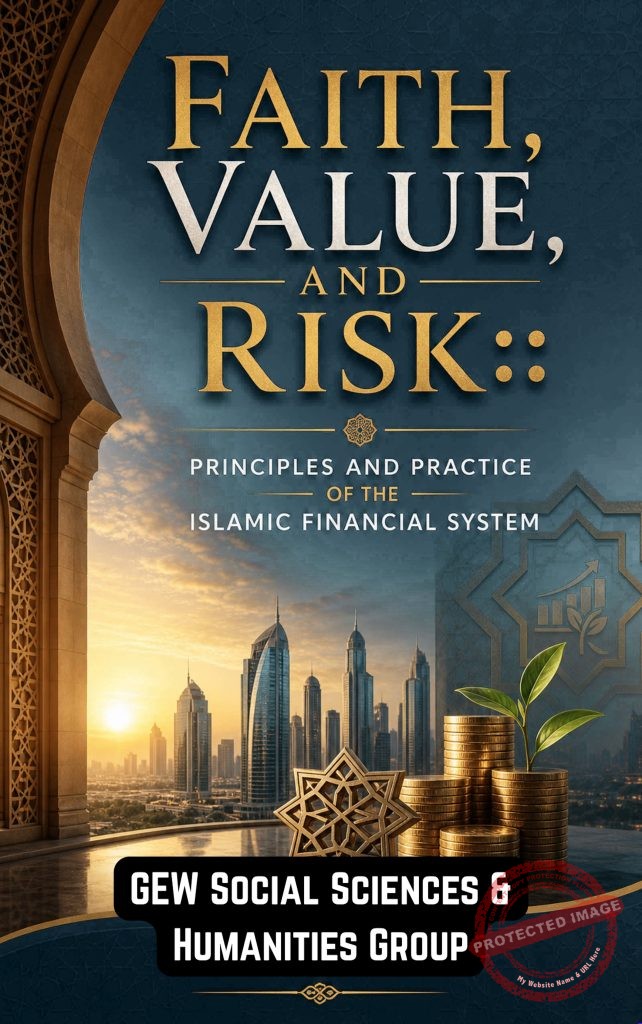
- Publisher : Global East-West (GEW)
- Publication date : August 9, 2026
- Language : English
- Print length : 204 pages
Faith, Value, and Risk: Principles and Practice of the Islamic Financial System explores Islamic finance as both a distinctive financial framework and an evolving field of economic practice.
Rather than treating Islamic finance merely as an alternative form of banking, this book examines the principles, institutions, contracts, governance structures, and emerging technologies that collectively shape the Islamic financial system. It starts by looking at the history and legal principles of Islamic finance, giving readers the basic ideas needed to grasp how it deals with money, contracts, ownership, risk, and ethical business practices.
The book then examines the principal instruments through which Islamic finance operates. Readers encounter equity-based contracts such as mudarabah and musharakah, alongside asset-backed mechanisms such as murabaha and ijarah. Particular attention is given to the Islamic emphasis on risk sharing and to the transition from conventional risk-transfer models toward structures consistent with Islamic principles.
From there, the discussion expands into institutional practice: Shariah governance and legal compliance, Islamic banking and retail financial products, Islamic capital markets and sukuk, and takaful insurance. The book also addresses the social dimension of finance through zakat, wealth redistribution, and social-finance mechanisms.
Its scope extends into some of the most important questions confronting contemporary Islamic finance. How can Islamic financial principles interact with environmental, social, and governance (ESG) concerns? What opportunities and challenges arise from blockchain and digital assets? How do regulatory environments differ across jurisdictions? What strategies can Islamic financial institutions use to develop sustainable business models and expand their markets? And how can institutions identify and mitigate Shariah non-compliance risks?
The final sections look toward emerging opportunities, innovation pathways, and the future strategic outlook of Islamic finance.
With its combination of foundations, instruments, institutions, regulation, technology, risk, and future trends, Faith, Value, and Risk is suited to students, academics, finance professionals, policymakers, entrepreneurs, and general readers seeking a structured understanding of Islamic finance in the contemporary world.
Available on request, in a range of formats and editions (e-book, Kindle, hardcover and paperback):
Links to various retailers: https://books2read.com/u/31vqBD
Amazon: https://www.amazon.com/dp/1787958086
Samawy (Saudi Arabia and the Gulf): https://www.samawy.com/i/1039601/Faith-Value-and-Risk